Why Do E-Bike Batteries Catch Fire?
In brief
- A battery fire starts when one of the battery cells overheats, for example through an internal short circuit after damage.
- A fall, an unsuitable charger, heat, charging in the cold or a manufacturing defect can damage a cell.
- If a cell gets too hot, the heating can reinforce itself and spread to the cells next to it.

An e-bike battery can catch fire when one of its battery cells overheats. That can start, for example, with an internal short circuit caused by damage. The heat can then trigger chemical reactions that produce even more heat. If this process keeps reinforcing itself, it can eventually lead to a fire.
How does such a problem develop inside the battery? And what is the difference between a battery that gets warm while charging and a battery that overheats?
What happens inside an e-bike battery?
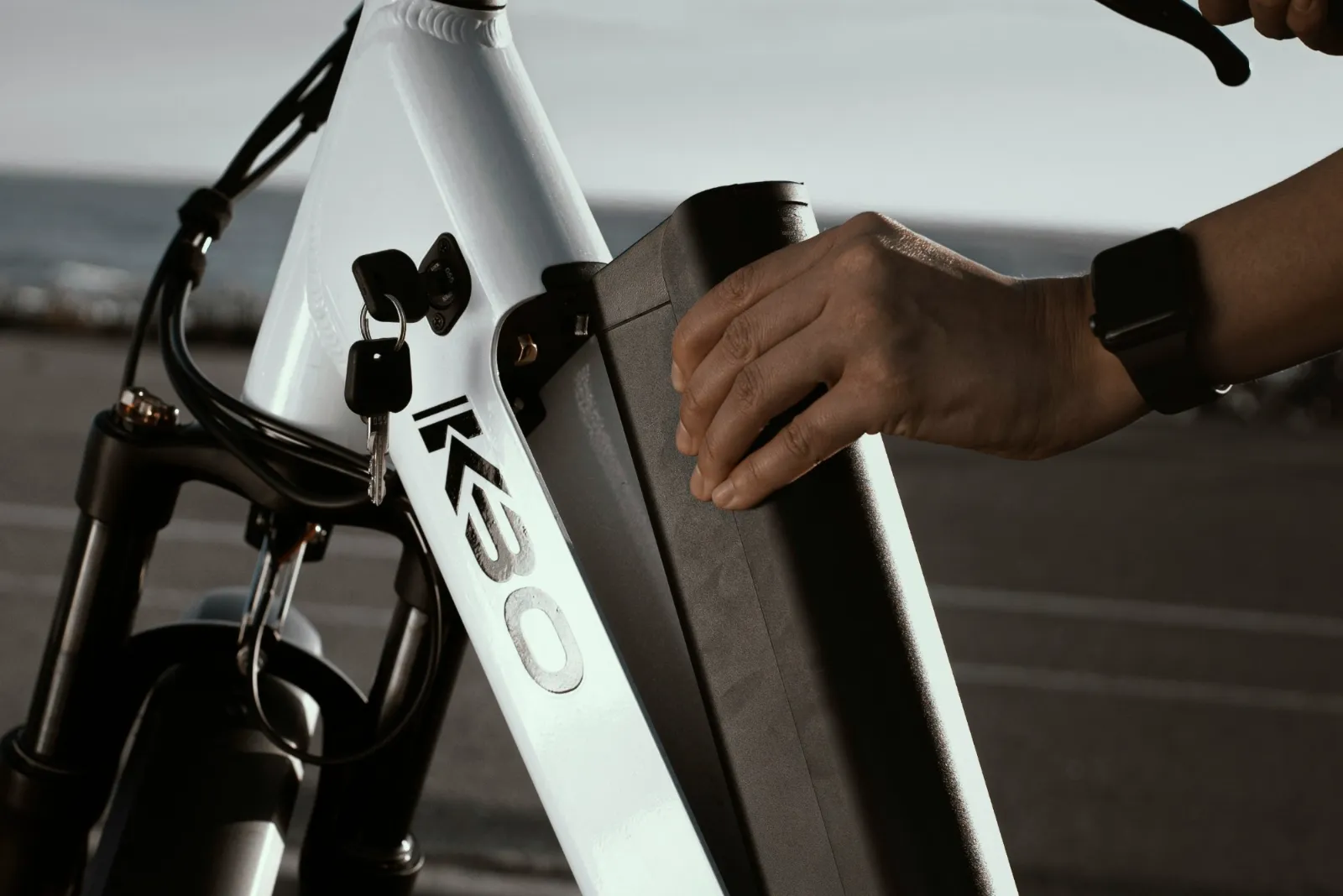
An e-bike battery is a lithium-ion battery. Its casing holds several smaller battery cells that are connected to each other. Together they store the energy that powers the motor of your electric bike.
Each cell has a positive and a negative electrode. During charging and use, lithium ions move between these parts. They do so through the electrolyte, a substance that makes it possible for those ions to travel. A thin separator lets the ions through but keeps the electrodes apart. This prevents them from touching directly and causing a short circuit.
While charging and riding, part of the energy is turned into heat. A battery can therefore get warmer without anything being wrong.2
What causes an e-bike battery fire?
A fall or impact
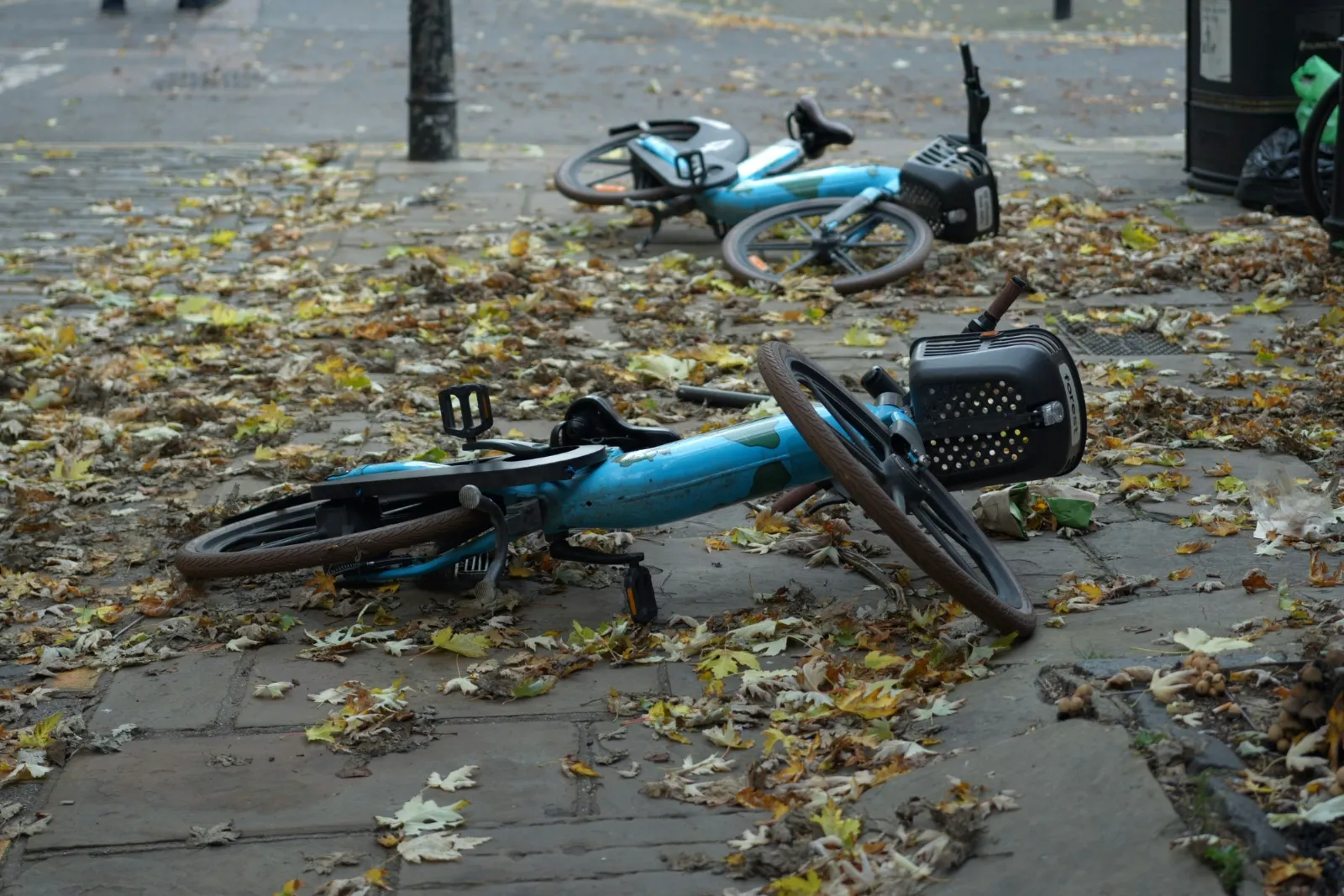
A fall or a hard knock can deform parts inside the battery. Think of a removable battery that slips out of your hands, your bike blowing over while it is parked, or a collision in which the battery on your bike is hit. If the separator in a cell is damaged, the electrodes can make electrical contact. That internal short circuit can release a lot of heat locally. The damage does not have to be visible on the outside, even if the battery still works.3
The wrong charger
An unsuitable charger can, for example, supply too high a charging voltage. If the protection does not stop this, the cells can become overcharged. This can degrade materials in the cell and create extra heat. So a plug that fits does not automatically mean a charger is suitable for your battery.2
Heat
A hot environment can make it harder for a battery to cool down, or make it heat up further. Think of a battery lying in full sun or left behind in a closed car on a warm day. If the cells get too hot as a result, chemical reactions can start that produce extra heat.2
Charging in the cold
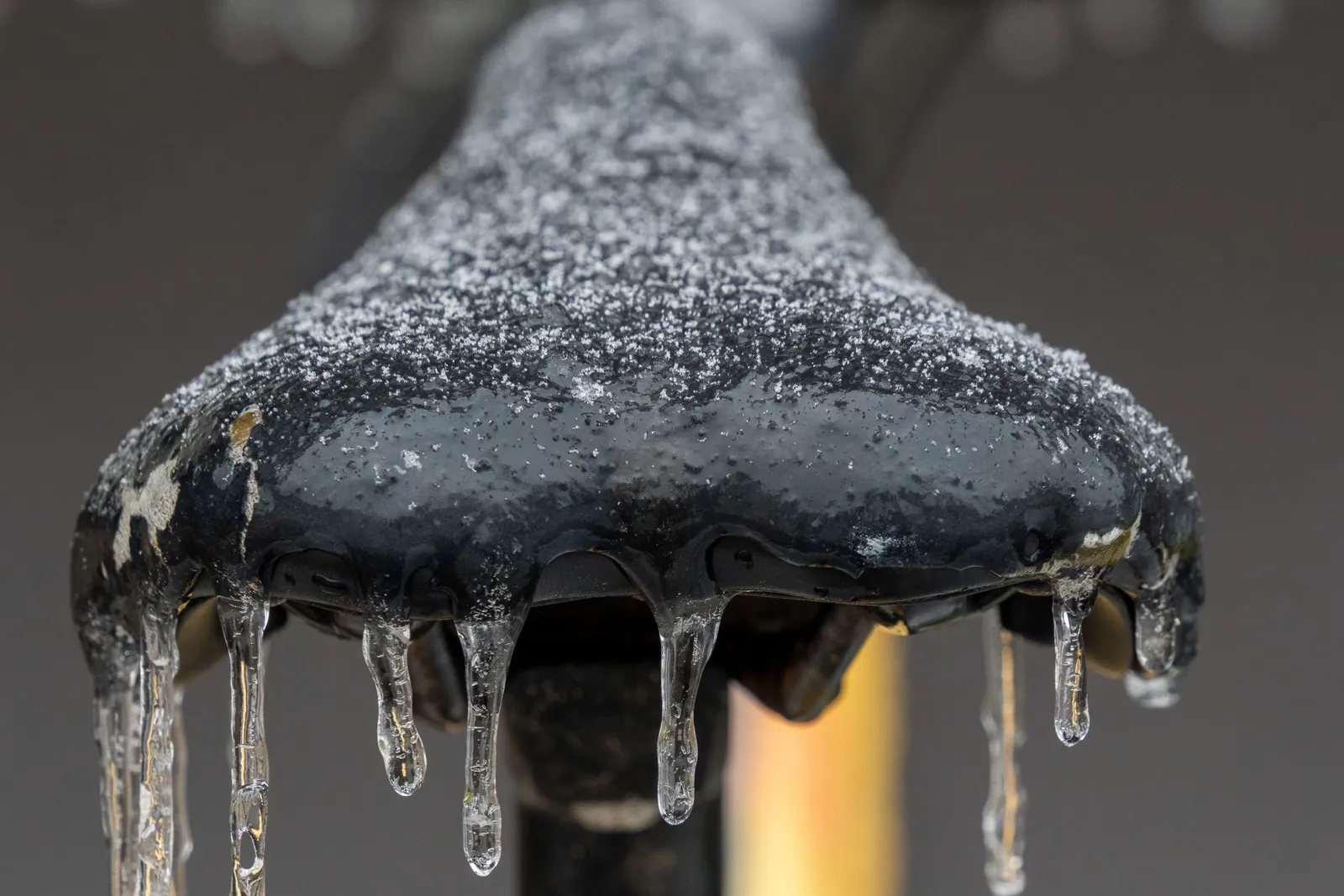
Charging while the battery is too cold can damage the cells in a different way. At low temperatures, lithium can be absorbed less easily into the negative electrode during charging. It can then build up on the surface instead. Those deposits can grow into branches that break through the separator and cause an internal short circuit.3
You can read how to store and charge your battery safely in winter in E-Bike Battery in Winter: Storage, Charging, Cold.
A manufacturing defect
A manufacturing defect can create a weak spot during production. A small metal particle left inside the cell or a separator that is not properly in place can, for example, lead to unwanted electrical contact. So a problem in the battery is not always caused by how it was used.3
Can an e-bike battery catch fire on its own?
It can seem as if a battery catches fire out of nowhere, for example while it is quietly sitting on the charger. Yet there is almost always a cause inside, such as damage from an earlier fall, charging in the cold or a manufacturing defect. That cause often cannot be seen from the outside, even if the battery works normally.3
These causes explain why a suitable charger, the right charging temperature and attention to damage matter. In our article How to Charge an E-Bike Battery Safely you can read how to put that advice into practice.
What is thermal runaway?
When a battery cell gets too hot, chemical reactions can start that give off heat themselves. This makes the temperature rise further and the reactions run faster and faster. If the cell produces more heat than it can get rid of, the overheating can keep reinforcing itself. This process is called thermal runaway.
The heat breaks down materials inside the cell, which produces gases. These build up and increase the pressure in the cell. When the gases escape, they can ignite. In this process, the overheating starts on the inside, before there are any visible flames.1, 2
The heat from one cell can then warm neighbouring cells so much that the same process starts there. Hot gases and ejected material can contribute to this. Whether the problem spreads further through the battery depends, among other things, on how the cells are arranged and how heat is carried away or held back.1
More insight into your e-bike battery
Heat is part of normal charging and riding, but it also plays an important role when a cell overheats. That is why it is interesting to follow how the temperature changes during a charge.
We are developing Ember: a sensor for your e-bike battery with an app to go with it. With it, we want to make it possible to follow your battery’s temperature remotely while it charges, even when you are not at home or your battery is not nearby.
We want to look further than a single measurement. By comparing several charges, we are exploring how to better recognise what is normal for your battery and when that changes. Ember is still in development. Our aim is to make it easier to keep an eye on your battery and to give insight into what usually stays out of sight while it charges.
Sources
This article is based on scientific publications about lithium-ion cells, damage and overheating. They support the explanation of how battery fires start and are not a product test of Ember.
- Li et al. (2026) — Research Progress on Thermal Runaway and Thermal Management of Lithium-Ion Batteries. Safety Science and Technology.
- Wang et al. (2019) — A review of lithium ion battery failure mechanisms and fire prevention strategies. Progress in Energy and Combustion Science.
- Journal of Power Sources (2025) — Internal short circuits in lithium-ion batteries; origins, detection, and experimental reproduction: A review
Sources consulted on 3 November 2026.