E-Bike Battery in Winter: Storage, Charging, Cold
In brief
- Only charge within your manufacturer’s temperature range. For Bosch and Shimano that is 0 to 40 °C (32 to 104 °F). Let a cold battery warm up first.
- Don’t leave the battery outside in the bike when it freezes. Manufacturers advise a dry place at around 10 to 20 °C (50 to 68 °F).
- Choose a charging spot that stays above freezing and is fire-safe, with a smoke alarm you can hear.
It freezes at night and your electric bike is in the shed. Do you bring the battery inside? Can you charge it when it is cold? And what does frost actually do to your e-bike battery? In winter, your battery needs a little more attention.
At Ember, we look closely at the risks around e-bike batteries, and temperature plays a big part in them. Winter adds a few questions. How cold can your battery get? When can you charge it again? And where do you keep it when it freezes?
For this article, we put the instructions from Bosch, Shimano and Gazelle side by side with the advice of the Dutch motoring organisation ANWB and research into lithium-ion cells. The basics: only charge within your manufacturer’s temperature range, let a cold battery warm up first, and choose a charging spot that is both above freezing and fire-safe.
How cold is too cold for an e-bike battery?
That depends on what you do with it. Your battery’s manual usually lists three temperature ranges: for riding, for storage and for charging. Storage is often possible at lower temperatures than charging.1, 3
The limits differ by brand, and with Bosch also by model and generation. That is why we don’t give a fixed lower limit here. Bosch and Shimano do both advise storing the battery in a cool place indoors, at around 10 to 20 °C (50 to 68 °F).1, 2, 3
So check the manual of your own battery. Not sure, or can’t find the manual? Then ask your bike mechanic.
Can you charge an e-bike battery in the cold?
Only if the battery is within the manufacturer’s charging range. For Bosch and Shimano, that is between 0 and 40 °C (32 and 104 °F).1, 3 Bosch batteries have temperature monitoring that blocks charging outside that range. Three lights on the battery then flash. In that case, Bosch advises disconnecting the battery and letting it warm up first.1
Note: this is about the temperature of the battery itself, not of the room. A battery that has just come out of a cold shed or back from a ride in freezing weather is colder than the room you put it in. That is why Bosch advises charging lithium-ion cells at room temperature.2
Why does that matter so much? At low temperatures, lithium is absorbed less easily into the negative electrode during charging. It is then deposited on the surface instead. Those deposits can put strain on the separator in the cell and eventually cause an internal short circuit.8, 9 The Netherlands Institute for Public Safety (NIPV) therefore lists a temperature that is too low as one of the ways a lithium-ion battery can fail.7 Our article Why Do E-Bike Batteries Catch Fire? explains what then happens inside.
Should you take the battery off your e-bike when it freezes?
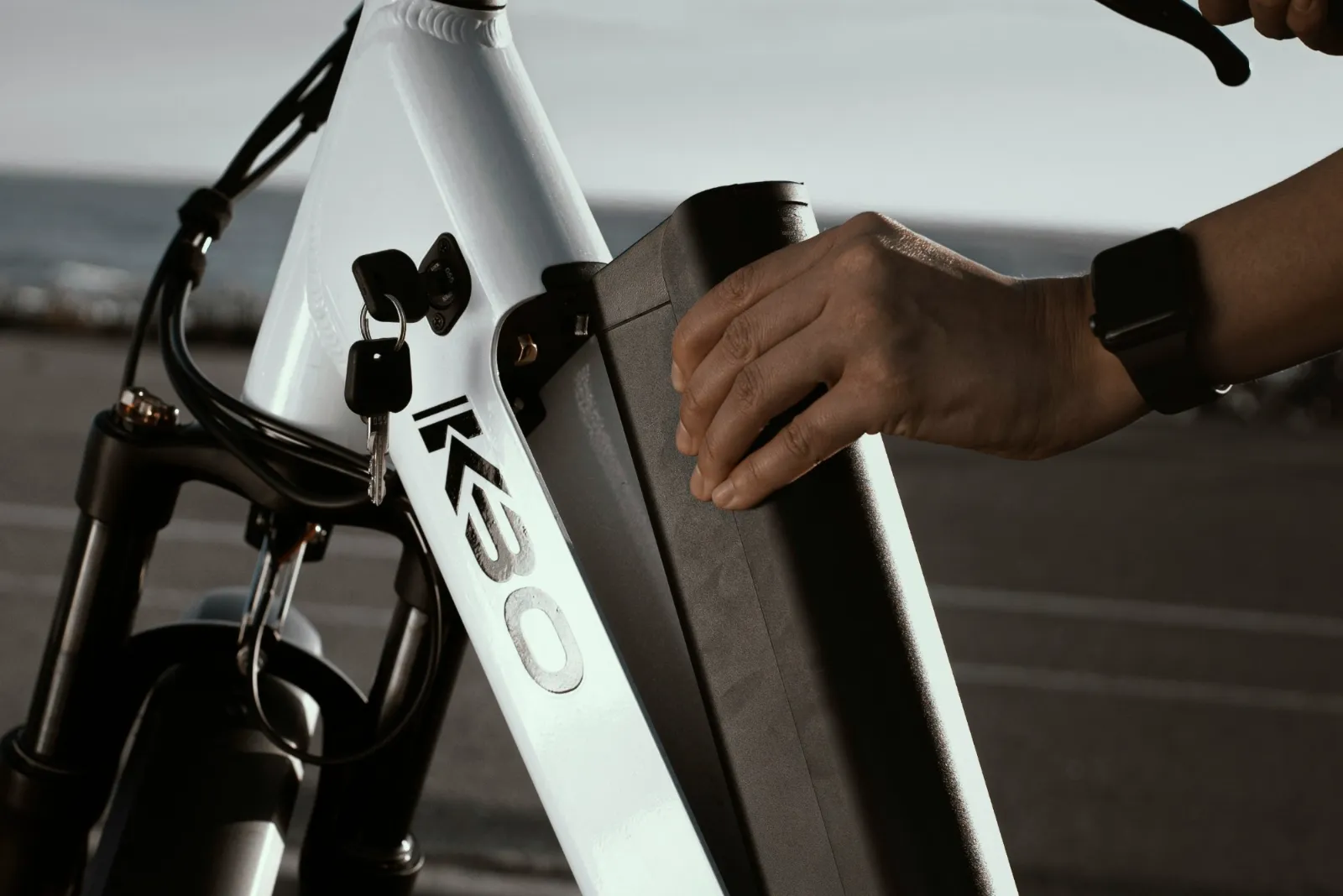
Yes, if you can. Bosch advises taking the battery off the bike when temperatures drop below zero, storing it indoors at room temperature and only putting it back shortly before you set off.2 Gazelle gives the same advice: store the battery in a dry, ventilated place at room temperature and only fit it just before your ride.4
Is the battery fixed in the frame? Then check your bike’s manual for what the manufacturer advises, or ask your bike mechanic.
Indoors, garage or shed: where to store your e-bike battery in winter?

This is where the advice differs, and it helps to know why.
Manufacturers mainly look at temperature. Bosch, Shimano and Gazelle advise storing and charging the battery at around room temperature, preferably between 10 and 20 °C (50 and 68 °F).2, 3, 12 The ANWB puts the emphasis on fire safety. It advises charging the battery preferably in a shed, storage room or garage at a temperature above 0 °C (32 °F), and so not inside the house.5
Charging indoors is fine, as long as you do it sensibly. The ANWB’s concern is understandable, though: in a battery fire, smoke and gases can build up in an enclosed space and block your escape route.7 Whether you charge indoors, in the shed or in the garage, pay attention to these points:
- Storing and charging are two separate moments. Let a cold battery warm up indoors first before you put it on the charger.
- Charging indoors? Choose a spot away from curtains, clothes and furniture. Don’t charge in a hallway, stairwell or other escape route.11
- Charging in the shed or garage? Check that the space stays above freezing. If the battery doesn’t reach charging temperature there, charge it somewhere else.1, 3
- Wherever you charge: a dry, clear spot and a working smoke alarm you can hear.6, 11
- Keep an eye on it. Charge when you are at home and awake.5, 6
You can read more about a safe charging spot in How to Charge an E-Bike Battery Safely
An analysis by the NIPV also shows that sheds and garages deserve extra attention. Of the 77 fires involving an e-bike that the institute found in media reports between 2020 and 2022, 32 started in a shed or garage.10 According to the NIPV, this is probably because many people keep their bike there at home. So it doesn’t mean that a shed is more dangerous, but it is a place where you are not always nearby while the battery charges.
Why does your e-bike lose range in the cold?
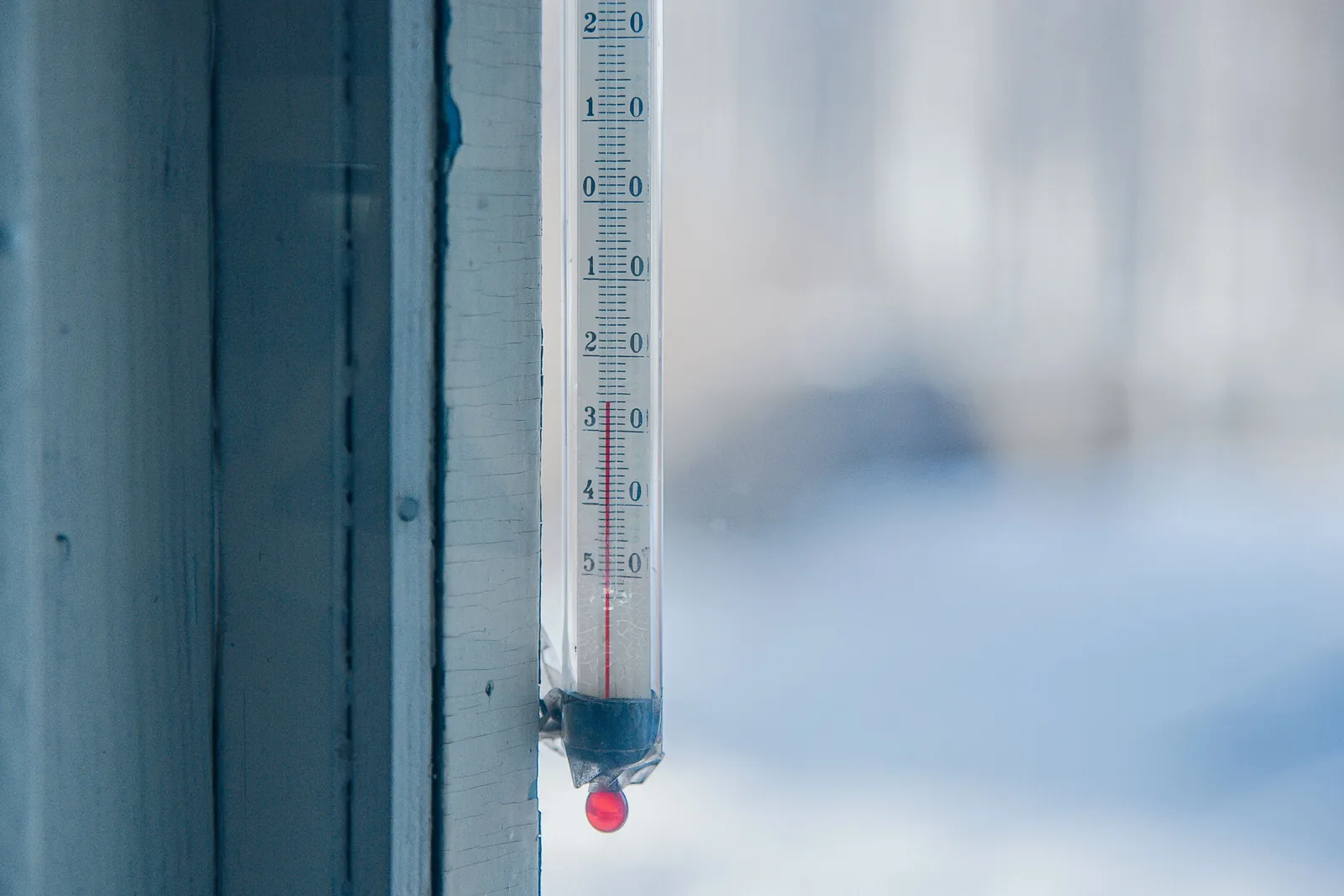
A cold battery temporarily delivers less energy. Shimano writes that a full battery takes you less far if you charge it at 5 °C (41 °F) or below.3 A battery that is kept indoors and only goes into the bike just before you leave is less affected by this.2
Not riding this winter? How to store your e-bike battery
If you won’t use your bike for a few months, take the battery out and store it somewhere dry. Don’t store it too cold. Bosch advises a charge level of about 30 to 60 percent, Gazelle between 30 and 70 percent.2, 12
Don’t let the battery run completely flat. The NIPV lists deep discharge as one of the ways a lithium-ion battery can fail.7 Whether and when you need to top up the charge in between differs by brand. Follow your battery’s manual for that.
In winter, your battery is often out of sight
In winter, you charge more often in places where you are not standing next to it: in the shed, in the garage or in a storage room. That is exactly where you want to know whether your battery is at the right temperature and how it behaves while charging.
That is why at Ember we are developing a sensor for your e-bike battery and an accompanying app that lets you follow the temperature while it charges. That way, you can see from inside the house how the temperature develops.
Ember is still in development. We want to make it easier to keep an eye on your battery, even when it is cold outside and your battery is not nearby.
Sources
This article brings together manufacturers’ instructions, advice from safety organisations and research into lithium-ion cells. Manufacturers set their own limits for each battery model; the manual for your battery always comes first.
- Bosch eBike Systems — Gebruiksaanwijzing Li-ion-accu PowerPack en PowerTube. Charging temperature 0 to 40 °C and temperature monitoring. Operating and storage temperatures differ by model and generation.
- Bosch eBike Systems — Met de eBike veilig de winter door. Advice on the battery in frost, storage and charging at room temperature.
- Shimano — SHIMANO STEPS Special Battery and Parts, User’s manual (UM-7K00A). Charging between 0 and 40 °C, storage at around 10 to 20 °C.
- Gazelle — Accu in de winter. Storing at room temperature and fitting the battery shortly before the ride.
- ANWB — Onderhoud fietsaccu in de winter. Advice on charging in a shed, storage room or garage above 0 °C.
- Ik laad accuraat — Tips voor het veilig opladen van je accu. Joint Dutch awareness campaign about charging spots, charging and maintenance.
- NIPV (2024) — Literatuuronderzoek naar de brandeffecten van Lithium-ion batterijbranden. Causes of failure of lithium-ion batteries and the effects of smoke and gases, pp. 7–8.
- Journal of Power Sources (2025) — Internal short circuits in lithium-ion batteries; origins, detection, and experimental reproduction: A review
- JRC, European Commission (2018) — Safer Li-ion batteries by preventing thermal propagation. Workshop report of the Joint Research Centre, pp. 8 and 21.
- NIPV (2023) — Analyse mediaberichten van branden met Light Electric Vehicles 2020–2022. Location of fires involving e-bikes, p. 11. Based on media reports.
- Veiligheidsregio Noord- en Oost-Gelderland — Hoe laad je je e-bike veilig op? Explanation of charging spots, escape routes and how well smoke alarms can be heard.
- Gazelle — Zo zorg je goed voor de batterij van je elektrische fiets. Storage at around 10 to 20 °C and a charge level of 30 to 70 percent when stored for longer.
Sources consulted on 13 November 2026.