How to Charge an E-Bike Battery Safely
In brief
- Check the battery, charger and cable for damage and use the charger that belongs with your battery.
- Charge in a dry, clear spot away from your escape route, with a working smoke alarm you can hear.
- Charge when you are at home and awake, and stop straight away if the battery gets unusually warm, smells or makes a noise.
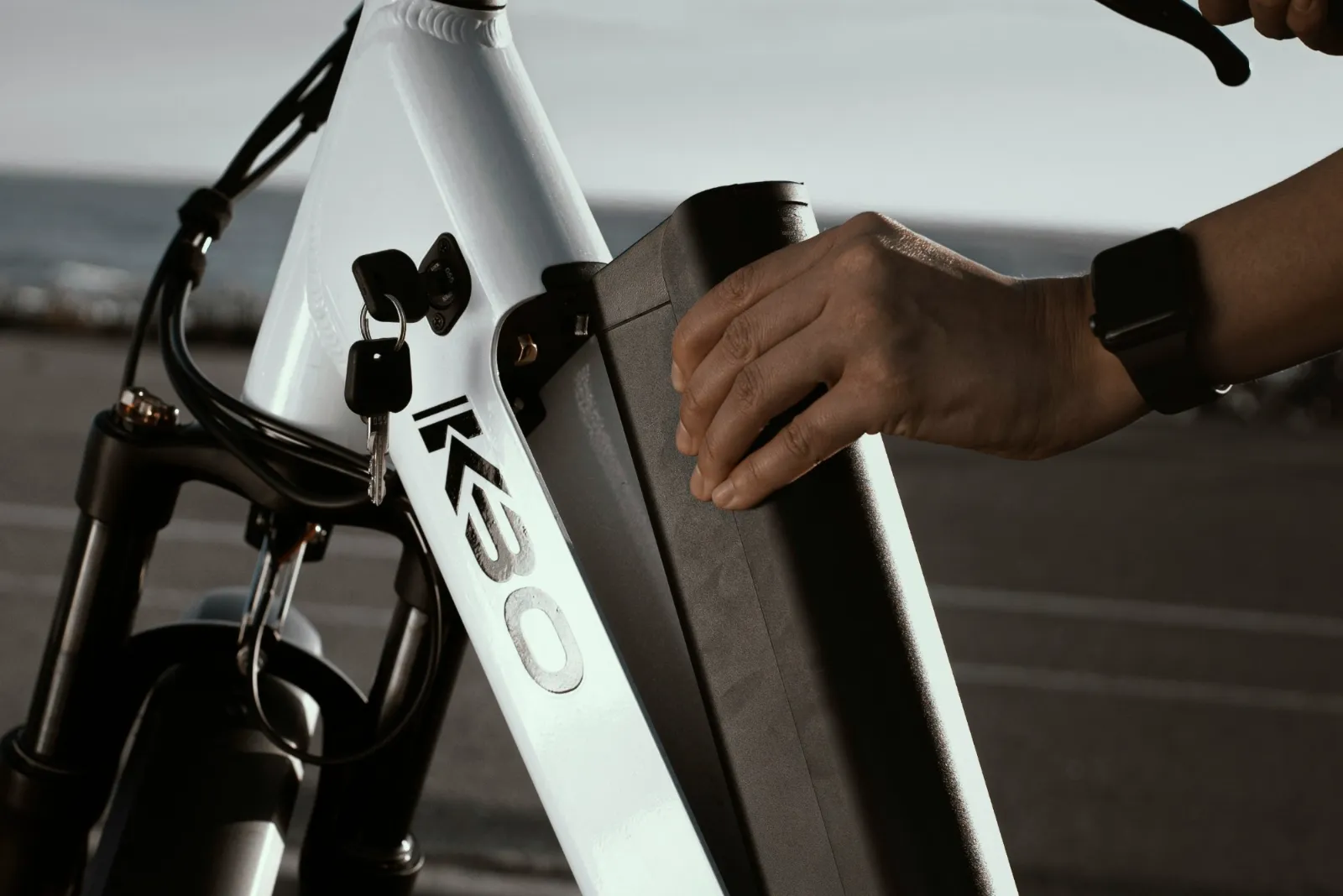
You get home, park your electric bike and plug in the battery. It happens almost automatically. But is your bike in a suitable spot? Is the battery still in good condition? And will you stay home while it charges? A good charging routine starts with paying attention to those questions.
What can you do yourself to reduce the risks when charging your e-bike battery? At Ember, we look closely at the risks around e-bike batteries. While developing our concept for temperature monitoring, we also look at how people charge their batteries.
For this article, we bring together the advice of the Dutch campaign Ik laad accuraat, the Dutch fire service (Brandweer Nederland) and Dutch safety regions. The basics: use a suitable charger, choose a dry and uncluttered charging spot, and charge when you are at home and awake.
What to check before you charge your e-bike battery
Check the battery, charger and cable for damage before you plug in. Do you see a crack, a dent or a damaged cable? Then don’t start charging. Has your battery been dropped? Then have your bike mechanic check it first, before you use or charge it again. The fact that it still works doesn’t mean it is undamaged.1, 3
Use the charger that belongs with your battery, or a replacement that the manufacturer recommends for it. A plug that fits doesn’t tell you whether the charger is suitable. If in doubt, ask your bike mechanic or supplier which charger you can use.1
Want to know why a fall or an unsuitable charger makes such a difference? Our article Why Do E-Bike Batteries Catch Fire? explains what happens inside the battery.
Can you charge an e-bike battery indoors?
You can, as long as you choose a spot that is safe for charging. Choose a dry spot where you can place a removable battery stably on a surface that cannot burn. Keep flammable things away and make sure the battery and charger can get rid of their heat. So don’t cover them with a coat, bag or cloth, for example.1, 2
Also make sure you can get out if something happens. Don’t charge in a hallway, stairwell or other escape route, and keep the exit clear.4 What else to watch out for depends on the space:
- At home: choose a spot away from curtains, clothes and furniture.
- In the shed: watch out for damp, winter cold and heating up in the sun.
- In the garage: keep the area around the battery free of boxes and other flammable things, even if you charge on a concrete floor.
A fixed charging spot is convenient, but check when you plug in that it is still dry and clear. Things may have been put next to it, or the conditions may have changed.
Also make sure there is a working smoke alarm in the room where you charge. Check that you can hear the alarm from where you usually are, especially if you charge in a shed or garage. You need to be able to hear the warning to respond to it.4
Is it safe to charge an e-bike battery overnight?
Better not. Charge your battery when you are at home and awake. Plugging in in the evening and leaving in the morning with a full battery sounds convenient, but when you are asleep you can react less quickly if something goes wrong. That is why the safety region Zuid-Holland Zuid advises choosing a time when you are around and can keep an eye on it.3
Do you usually get home late? Then see whether you can charge at a different time. Take the battery off the charger as soon as it is full and unplug the charger from the socket.1, 2
Charging in cold, heat or damp conditions
Before you plug in the battery, check whether the conditions are right for charging. A battery that has been standing in full sun or has just come out of an ice-cold shed shouldn’t simply go straight onto the charger. Do you charge in a shed or garage in winter? In E-Bike Battery in Winter: Storage, Charging, Cold you can read how to go about it.
Preferably charge at room temperature, in a dry spot and away from sunlight and heat sources. Your battery’s manual says at which temperatures you may charge. Follow those instructions: how long a battery needs to cool down or warm up depends on the battery and the conditions.1
Has the battery or charger got wet, or do you suspect there is water inside? Then don’t start charging, and ask your supplier for advice. Even if the outside is dry, there may still be moisture inside.
Does your e-bike battery get warm while charging?
A little warmth while charging is normal. Does the battery get unusually warm, or do you notice it working differently than you are used to? Then stop charging and using it, and have it checked by your bike mechanic or supplier. Don’t open the casing yourself and don’t try to repair the battery yourself.2, 3
Smoke or fire: what to do if your battery catches fire
Is the battery smoking, is there a fire, or do you notice a strange smell, a strange sound, leaking, sparks or deformation while charging? Leave the house immediately and call 112. Don’t try to put out the fire yourself, and don’t move a smoking or burning battery.2, 3
A good charging routine sometimes needs adjusting
Safe charging starts with a suitable spot, the right charger and attention to your battery. By making that a fixed habit, you can reduce the risks. You can never rule them out completely.
In practice, that sometimes calls for adjustments. Your shed is cold, the most convenient socket is in the hallway, or you get home late. That is when it helps to look at what you could do differently. Is there a better spot? Can you charge at a different time? And who can help you if you have doubts about your battery?
That everyday practice is what keeps us busy at Ember. That is why we are developing a sensor for your e-bike battery and an accompanying app that lets you follow the temperature while it charges. Is your bike in the shed or your battery in the garage? Then you can see in the app how the temperature develops. That gives you more insight into your battery, even when you are not standing next to it.
Ember is still in development. We want to make it easier to keep an eye on your battery while it charges and to check the temperature easily in the app.
Sources
This article brings together public advice from Dutch safety organisations and the campaign Ik laad accuraat. That advice partly overlaps; these are not separate scientific studies.
- Ik laad accuraat — Tips voor het veilig opladen van je accu. Joint Dutch awareness campaign about charging spots, charging and maintenance.
- Brandweer Nederland — Opladers, batterijen en accu’s. General safety advice and warning signs.
- Veiligheidsregio Zuid-Holland Zuid — Veilig laden. Published on 2 September 2026. Advice on being present, damage and emergencies.
- Veiligheidsregio Noord- en Oost-Gelderland — Hoe laad je je e-bike veilig op? Explanation of charging spots, escape routes and how well smoke alarms can be heard.
Sources consulted on 2 November 2026.